Reduce legacy platform risk
Move historical recordings off end-of-life systems while maintaining compliant access.
Retain communications securely and access them with confidence, whether for review, investigation, compliance or long‑term operational use.

Archiving is a core part of the Liquid Voice platform. It ensures recorded communications are retained in a secure, auditable and usable way, so organisations can meet retention obligations, support investigations and maintain confidence in how records are managed over time.
The capability
Store communications in a controlled archive that supports long‑term retention without reliance on platform‑specific limits.
Set retention and access rules that reflect organisational, regulatory or contractual requirements.
Maintain clear audit trails so access, export and review activity is transparent and defensible.
Make it easier for users to locate and access historical communications when they are needed.
Avoid keeping ageing systems alive purely for historical access.
Provide a stable archive that continues to underpin review, analysis and oversight even as platforms change.
Key benefits
Liquid Voice Archiving helps organisations retain communications securely and access them with confidence, providing a governed foundation for review, investigation, compliance and long‑term operational continuity.

Reduce reliance on failing systems, end-of-life support, and fragile historical access.

Retire old infrastructure and simplify the way historical communications are retained and accessed.

Retrieve older communications quickly and reliably for review, investigation, or response.

Support controlled access, auditability, and long-term accountability for retained communications.
Explore how Liquid Voice helps teams retain, govern and access communications securely, supporting review, investigation and long‑term confidence across the wider platform.
Retain communications in line with regulatory, legal and operational requirements using clearly defined policies. Search, retrieve and review communications from a single governed archive, with full context and clear audit history. Enable faster access for investigations, disputes and compliance review without relying on fragmented systems.
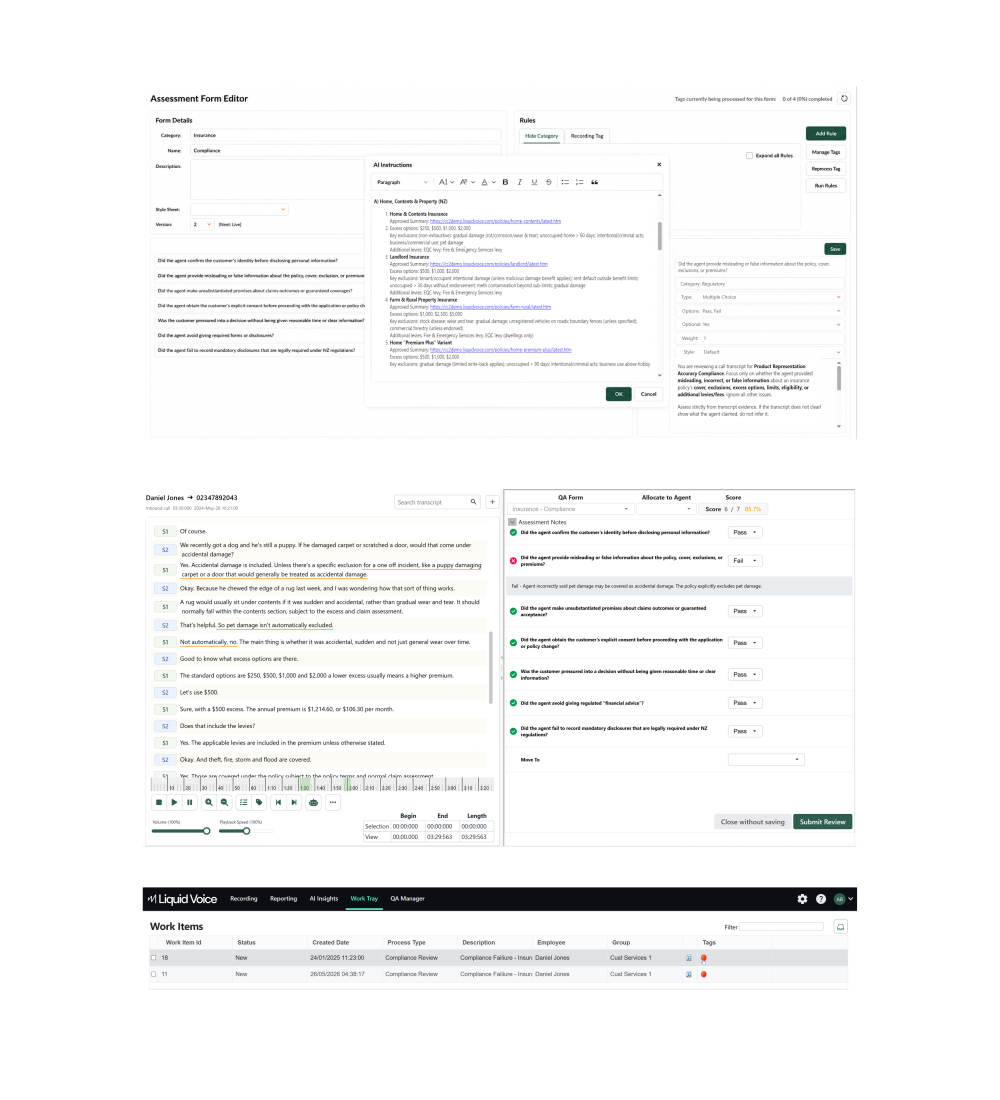
Archiving supports the practical needs of teams that depend on secure retention, clear governance and dependable access to communications over time.
Move historical recordings off end-of-life systems while maintaining compliant access.
Retrieve older communications faster and with less effort when they are needed.
Retire old servers or environments that are kept running only to preserve access to recordings.
Separate retained communications more cleanly during divestments, transfers, or organisational change.
Why Liquid Voice
Liquid Voice Archiving is designed for organisations that need records to be retained, governed and accessed easily — not buried in legacy systems or locked inside platform silos.

Role‑based access, SSO and full audit trails help protect retained communications and support defensible access and export.

Retention policies support extended time horizons without forcing organisations to keep legacy platforms in place.

An intuitive interface makes it easy for authorised users to find and retrieve records without specialist training.

A central archive continues to support review and investigation even as communication platforms change.
The solution successfully consolidated all of our legacy data into one environment... and was designed to allow the level of control required to manage a complex organisational structure.

Explore how governed retention and dependable access can support confidence over time.
See some of our most frequently asked questions about Archiving and how it supports the wider Liquid Voice platform.
Communications archiving is the controlled retention of recorded interactions and related communication data so they can be retrieved, reviewed and evidenced when needed. For regulated organisations, it helps turn recordings into a governed long-term record rather than unmanaged storage.