Structured interaction summaries
Turn transcripts into consistent summaries in the format your teams need, reducing manual documentation and improving record quality.
Automatically turn recorded communications into structured summaries, consistent reviews and usable insight — without manual effort or heavy analytics setup.
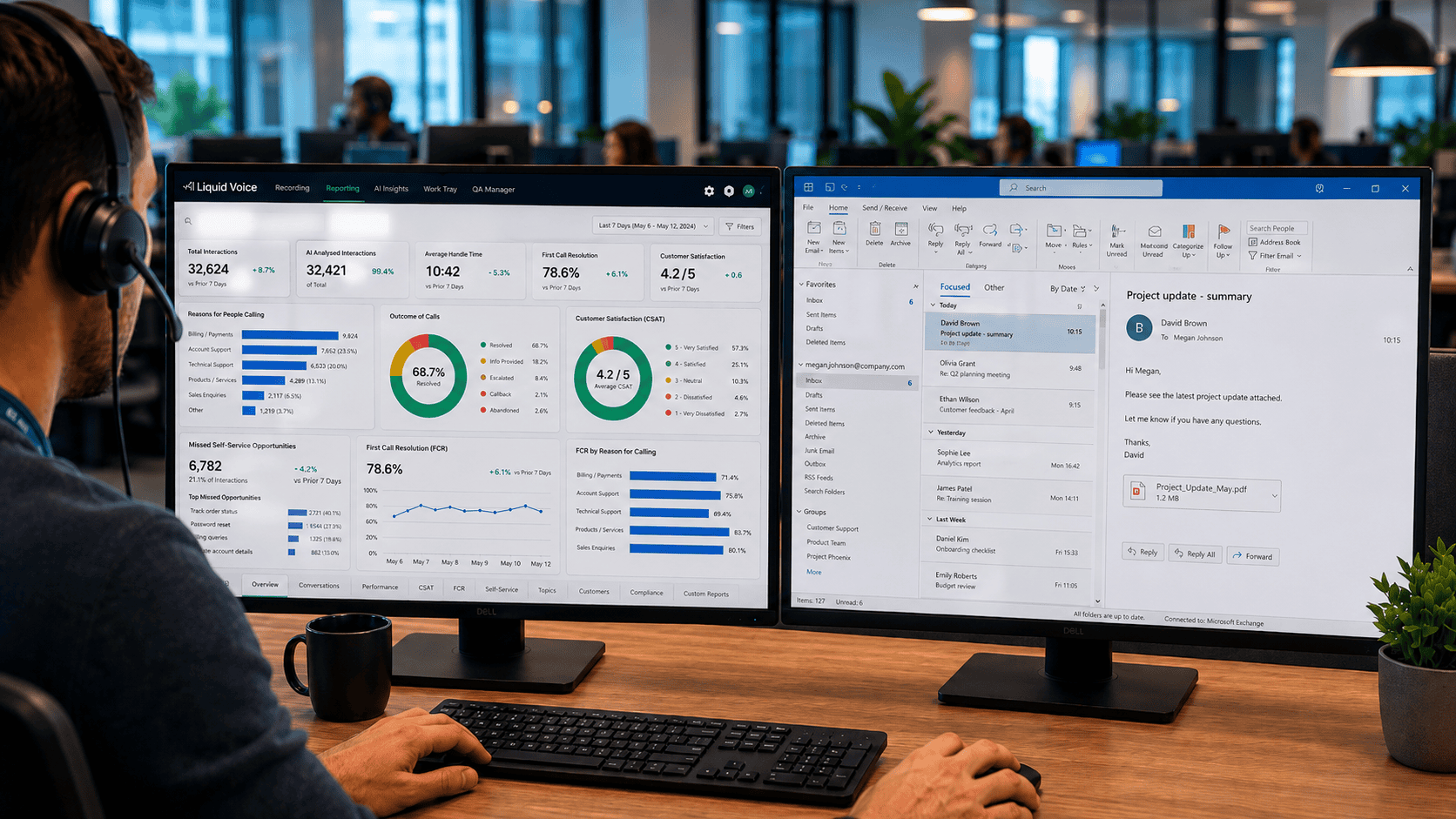
Post‑Call Analytics helps organisations move beyond manual review and shallow dashboards by transforming recorded communications into structured summaries, automated reviews and clear evidence for decision‑making.
It is designed for environments where large volumes, long interactions and changing requirements make sampled review and manual QA unreliable.
The capability
Review every recording, not just small samples.
Assess whether required policies, procedures, regulations, product rules, exceptions, and approved wording were followed.
Create more consistent evaluations aligned to your real procedures and quality standards.
Surface serious exceptions and route them into review, coaching, escalation, or remediation workflows.
Generate structured transcriptions and summaries that reduce manual documentation effort and improve consistency.
Ask operational questions and define reporting datasets in plain text without heavy setup.
Drill from reports to linked recordings, transcripts, rationale, and supporting context.
Key benefits
Liquid Voice Post‑Call Analytics helps organisations understand what is driving customer outcomes, repeat contact, complaints, compliance risk, and operational performance gaps — without heavy configuration.

Apply the same evaluation logic across all relevant interactions, not just samples.

Lower the time spent on manual notes, summaries and documentation.

Check every relevant recording against the full range of compliance risks, procedures, exceptions, and required standards.

Base actions on evidence that can be reviewed, explained and validated.
Explore how Liquid Voice helps teams transcribe, summarise, evaluate and understand communications more effectively across the wider platform.
Automatically assess recorded interactions against defined quality and compliance criteria, including long and complex calls. Results are consistent and explainable, with clear links back to transcripts and recordings to support coaching, oversight and investigation.
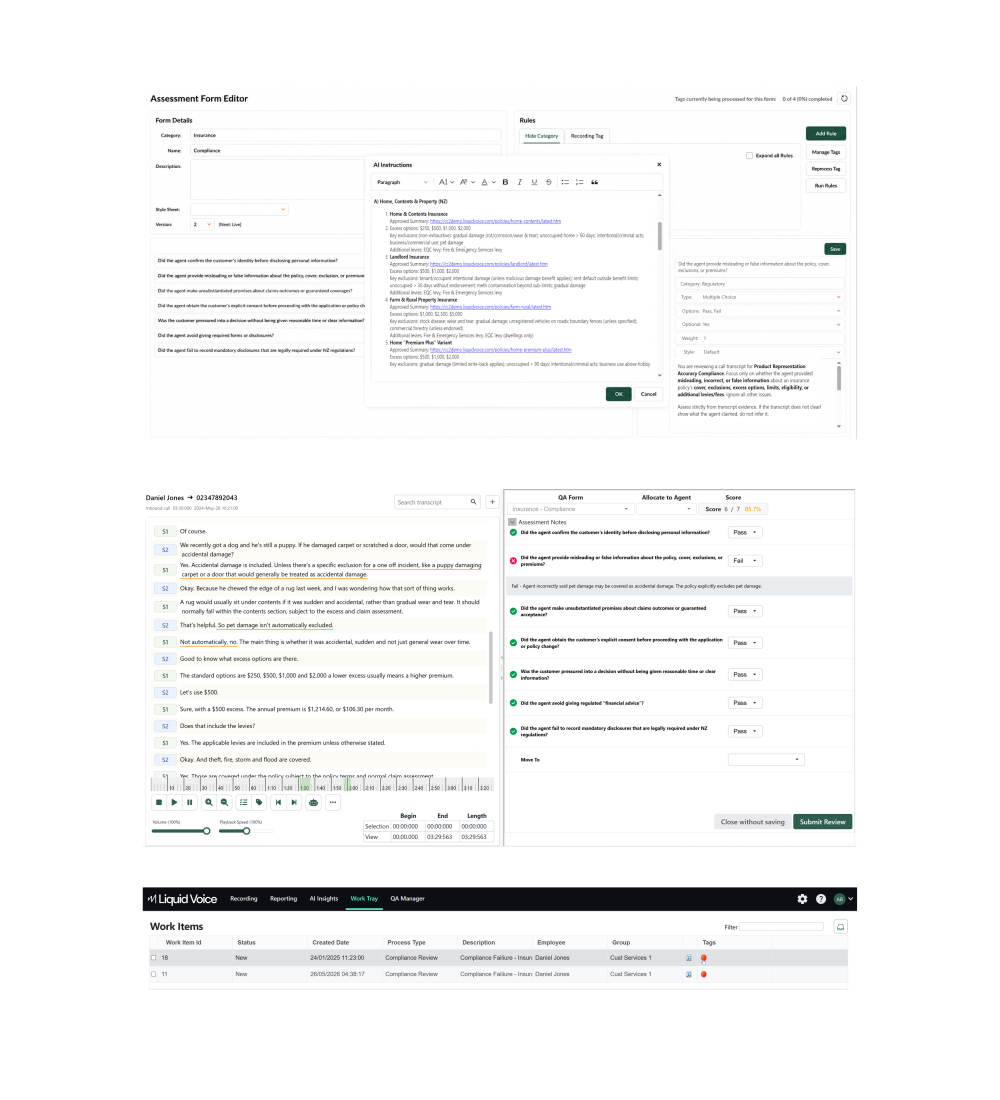
Post-Call Analytics turns recorded interactions into structured summaries, detailed quality and compliance reviews, operational insight, and dependable evidence — while letting users ask questions and define reporting datasets in plain text, without heavy configuration.
Turn transcripts into consistent summaries in the format your teams need, reducing manual documentation and improving record quality.
Move directly from review outcomes and reports to the underlying recording, transcript, rationale, and supporting context.
Check every relevant recording against the full range of compliance risks, procedures, exceptions, required standards, and approved wording — not just a sample.
Understand what is driving customer outcomes, repeat contact, complaints, compliance issues, incidents, and performance gaps — without heavy configuration.
Why Liquid Voice
Liquid Voice Post-Call Analytics is designed for organisations that need post-interaction review to cover the full range of operational, quality, and compliance risks — consistently, explainably, and without heavy setup, ongoing tuning, or reliance on specialist analysts.

Findings are grounded directly in the underlying calls and transcripts, giving teams confidence in why issues or patterns appear.

Review logic can be adapted as requirements change, without constant tuning, analyst dependency or rebuilding dashboards.

Designed to handle long, complex interactions and large volumes without artificial limits or hidden constraints.

Insights are presented in a way that helps teams understand what to do next, not just what happened.
In a single day, Liquid Voice generated more insight than we previously could in six months.

Explore how structured transcription, automated summaries and evaluation can reduce effort while improving confidence in post‑interaction outcomes.
See some of our most frequently asked questions about Post-Call Analytics and how it supports the wider Liquid Voice platform.
Post-call automation helps reduce manual work after an interaction by creating summaries, extracting key details, tagging calls and supporting follow-up workflows. This gives teams a more consistent record of what happened while reducing the admin burden on agents, supervisors and reviewers.